Case Study: Whole-Home Mold Treatment & Indoor Air Quality Restoration
Case Study: Whole-Home Mold Treatment & Indoor Air Quality Restoration
When a Localized Mold Issue Becomes a Whole-Home Problem
A family contacted Pure Maintenance of Kansas after growing concerns about indoor air quality and potential mold exposure inside their home.
During our initial inspection, we discovered a moisture issue originating in the sump pump area. While elevated mold levels were expected near the source, testing revealed something much more significant: mold spores had traveled throughout the home, including upper-level living spaces and the primary bedroom.
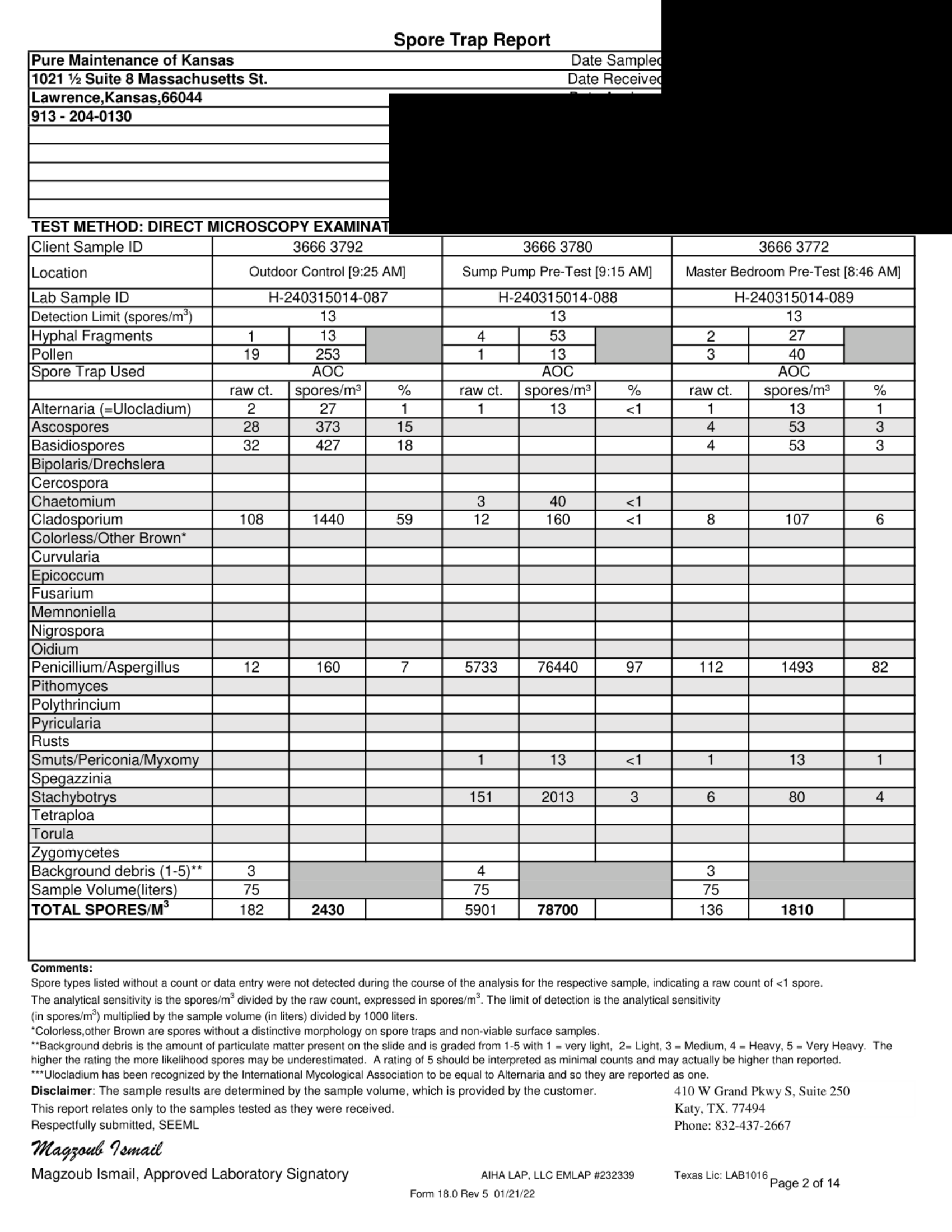
Initial Testing Revealed Elevated Mold Levels
Air quality testing identified elevated fungal spore counts throughout the home, including the presence of Stachybotrys and Chaetomium—two toxigenic molds commonly associated with chronic moisture intrusion and water-damaged building materials.
Key Findings
Sump Pump Area
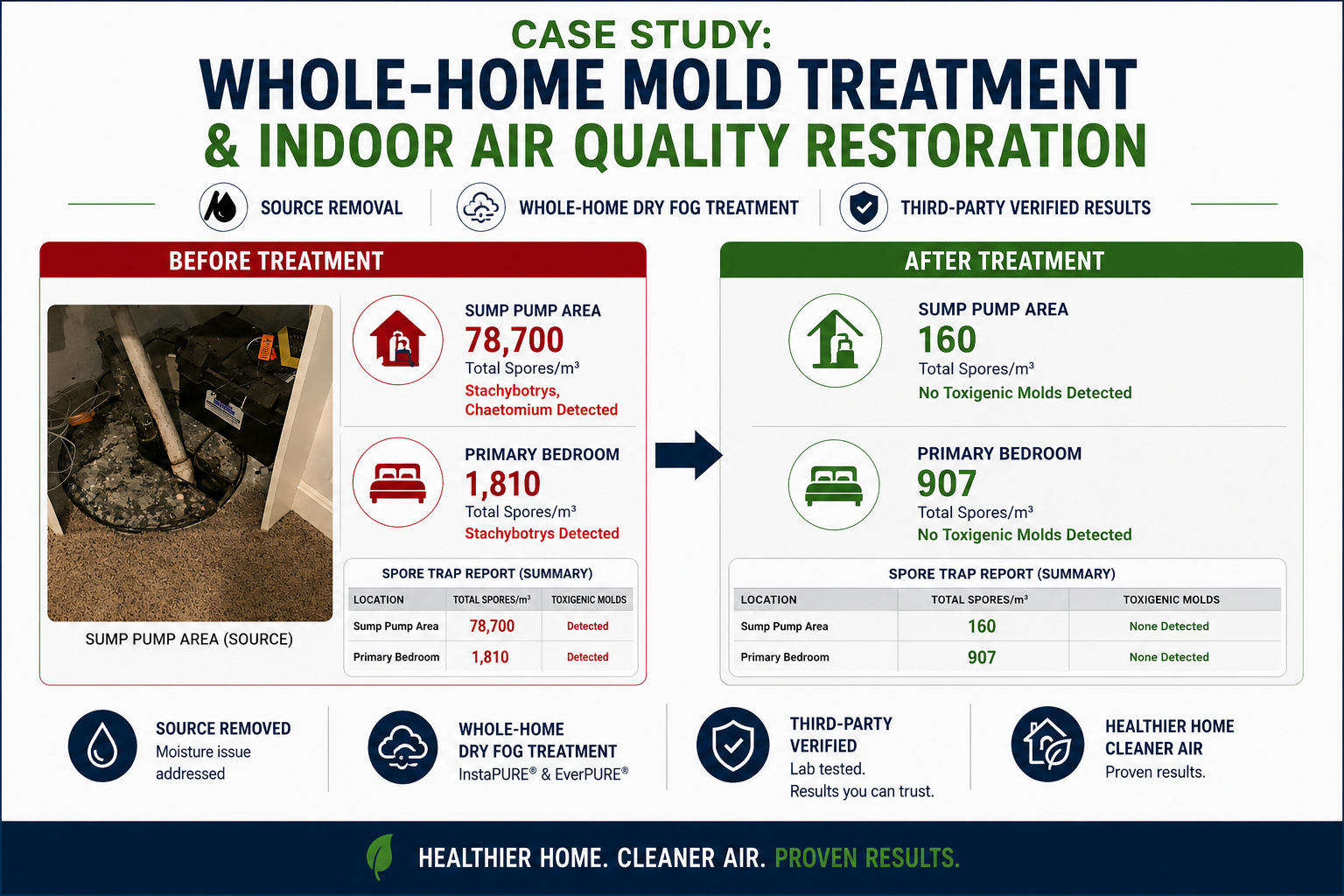
78,700 total spores/m³
- Stachybotrys detected
- Chaetomium detected
Primary Bedroom
1,810 total spores/m³
- Stachybotrys detected
The presence of toxigenic molds in both the source area and upstairs living spaces confirmed that cross-contamination had occurred throughout the home.
Why These Results Matter
Not all molds are treated the same.
Many fungi, such as Penicillium and Aspergillus, are naturally present in the environment and can often be found at controlled levels indoors. While elevated concentrations may indicate a problem, their presence alone does not necessarily signal severe contamination.
Stachybotrys and Chaetomium are different.
These molds are generally considered non-tolerance molds in indoor environments because they are commonly linked to active water damage and prolonged moisture exposure. Their presence often indicates a moisture problem that requires immediate attention.
Homeowners experiencing elevated mold conditions frequently report symptoms such as:
- Headaches
- Sinus irritation
- Persistent coughing
- Fatigue
- Brain fog
- Respiratory irritation
- Increased allergy symptoms
Because of this, our goal is never simply to reduce mold counts—we focus on addressing the moisture source and eliminating toxigenic mold contamination whenever possible.
The Remediation Process
Step 1: Addressing the Source
After identifying the moisture issue, remediation efforts began.
Water-damaged drywall was removed from affected areas, and impacted framing and structural surfaces were cleaned and restored using specialized mold stain removal techniques.
Step 2: Whole-Home Treatment
Once remediation was complete, the property underwent Pure Maintenance's proprietary two-step VaPure® Dry Fog Treatment Process, designed to address both airborne and surface contamination throughout the structure.
InstaPURE®
The first phase utilized an EPA-registered hospital-grade fungicide, virucide, and bactericide that was dispersed throughout the entire home, including the HVAC system and ductwork.
This process helps address airborne microbial contamination that traditional remediation methods may not fully reach.
EverPURE®
The second phase involved the application of an EPA-registered antimicrobial protectant designed to provide residual surface protection for up to 90 days.
The Results
Dramatic Improvement in Indoor Air Quality
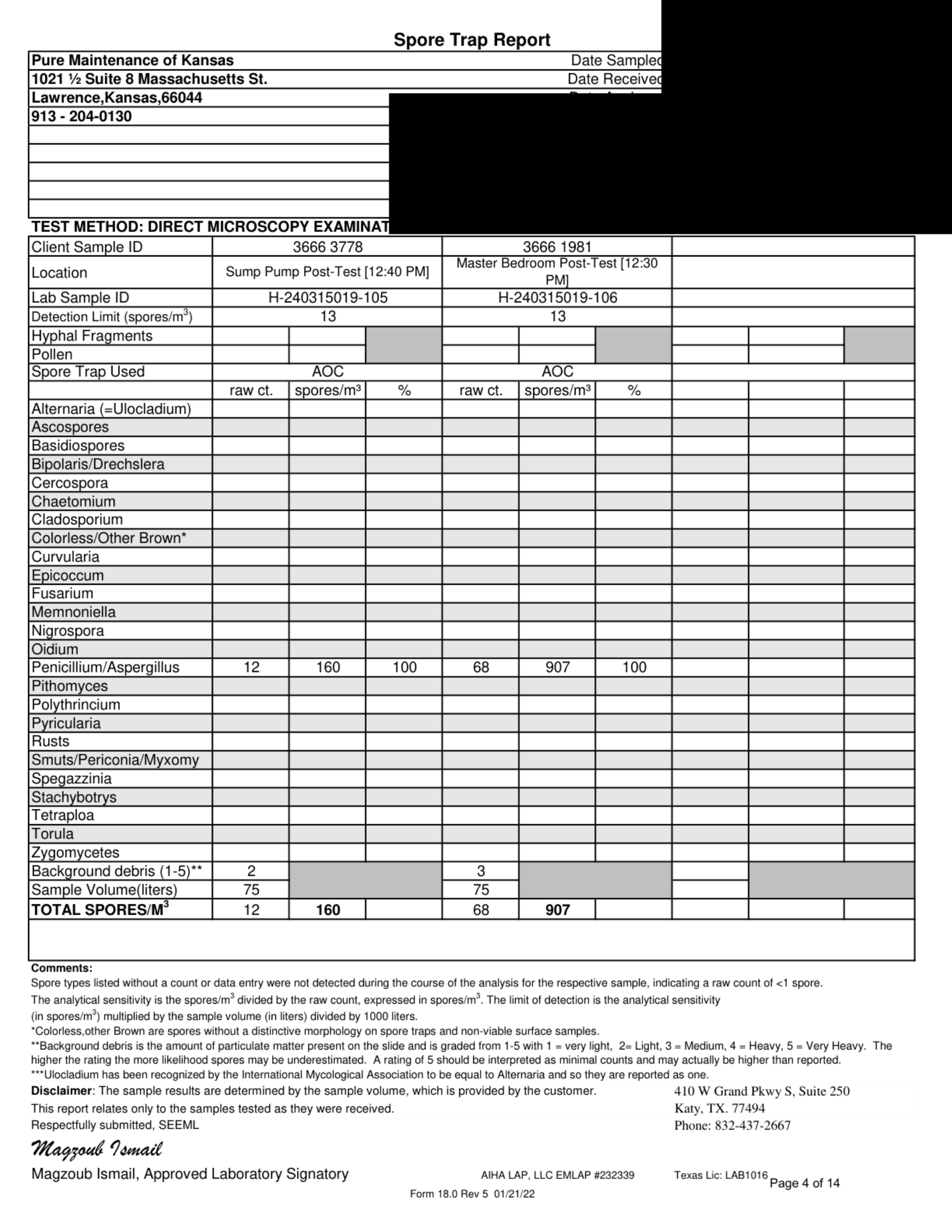
All post-treatment testing was conducted by an independent third-party laboratory to verify treatment effectiveness and ensure unbiased results.
Sump Pump Area
Before Treatment: 78,700 spores/m³
After Treatment: 160 spores/m³
Result: No detectable toxigenic molds.
Primary Bedroom
Before Treatment: 1,810 spores/m³
After Treatment: 907 spores/m³
Result: No detectable toxigenic molds.
Third-Party Verified Success
While naturally occurring molds remained at normal background levels, the dangerous toxigenic molds associated with the active moisture issue were no longer detected following treatment.
The results demonstrated:
Successful source removal
Effective remediation
Significant reduction in airborne mold levels
Whole-home restoration of indoor air quality
Final Takeaway
One of the biggest misconceptions about mold is that it stays confined to the area where it starts.
This project demonstrates how airborne mold contamination can spread throughout an entire home—even reaching separate floors and living spaces far from the original moisture source. Once contamination becomes airborne, addressing only the visible growth is often not enough.
By identifying the source, performing targeted remediation, and treating the entire indoor environment, the home experienced a dramatic improvement in indoor air quality and the successful elimination of toxigenic mold contamination.
Healthy Home. Cleaner Air. Proven Results.